Services for Dog Owners
Quick overview of our services
-
![A happy English Setter dog wearing a blue harness, with black and white fur, sticking out its tongue, against a light purple background.]()
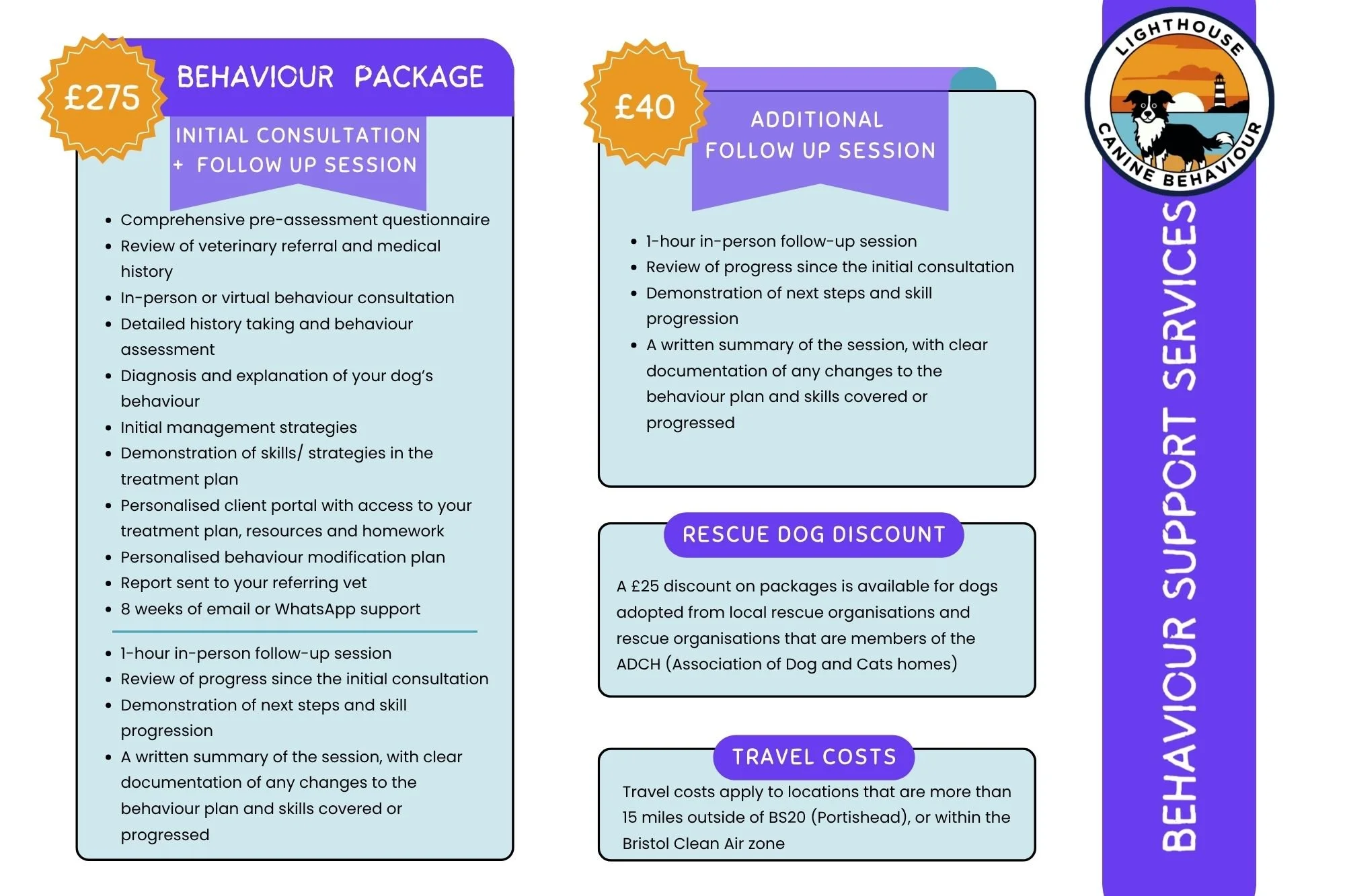
Behaviour Consultations (From £275)
Comprehensive, in-person behaviour consultation at your home (or an agreed location). Includes detailed history taking, vet record review, and a personalised behaviour plan. You’ll gain a clearer understanding of your dog’s behaviour and learn the skills needed to support lasting, positive change.
-
![A black and white dog with a blue collar and a harness, sitting against a light blue background. The dog has a happy expression with an open mouth, showing its teeth.]()
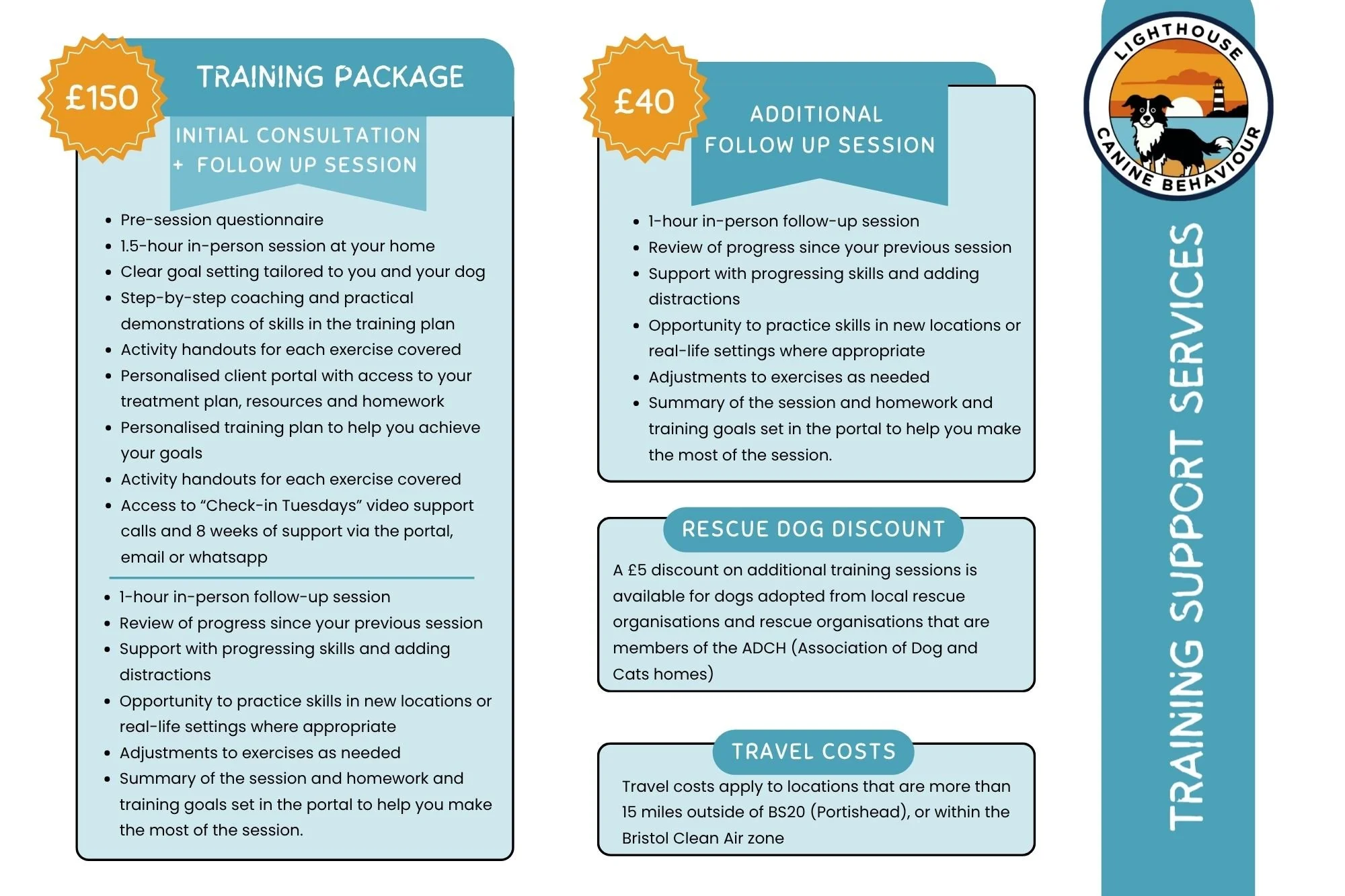
1-2-1 Training Packages (From £150)
Ideal for dogs not requiring a behaviour consultation, but who would still benefit from the structure of a training plan to achieve their goals. Each package includes a goal-setting session to understand your priorities, a personalised training plan and practical exercises tailored to your dog. You’ll learn clear, effective skills to help your dog succeed.
-
![Close-up of a happy dog with its mouth open and tongue out, against a plain beige background.]()
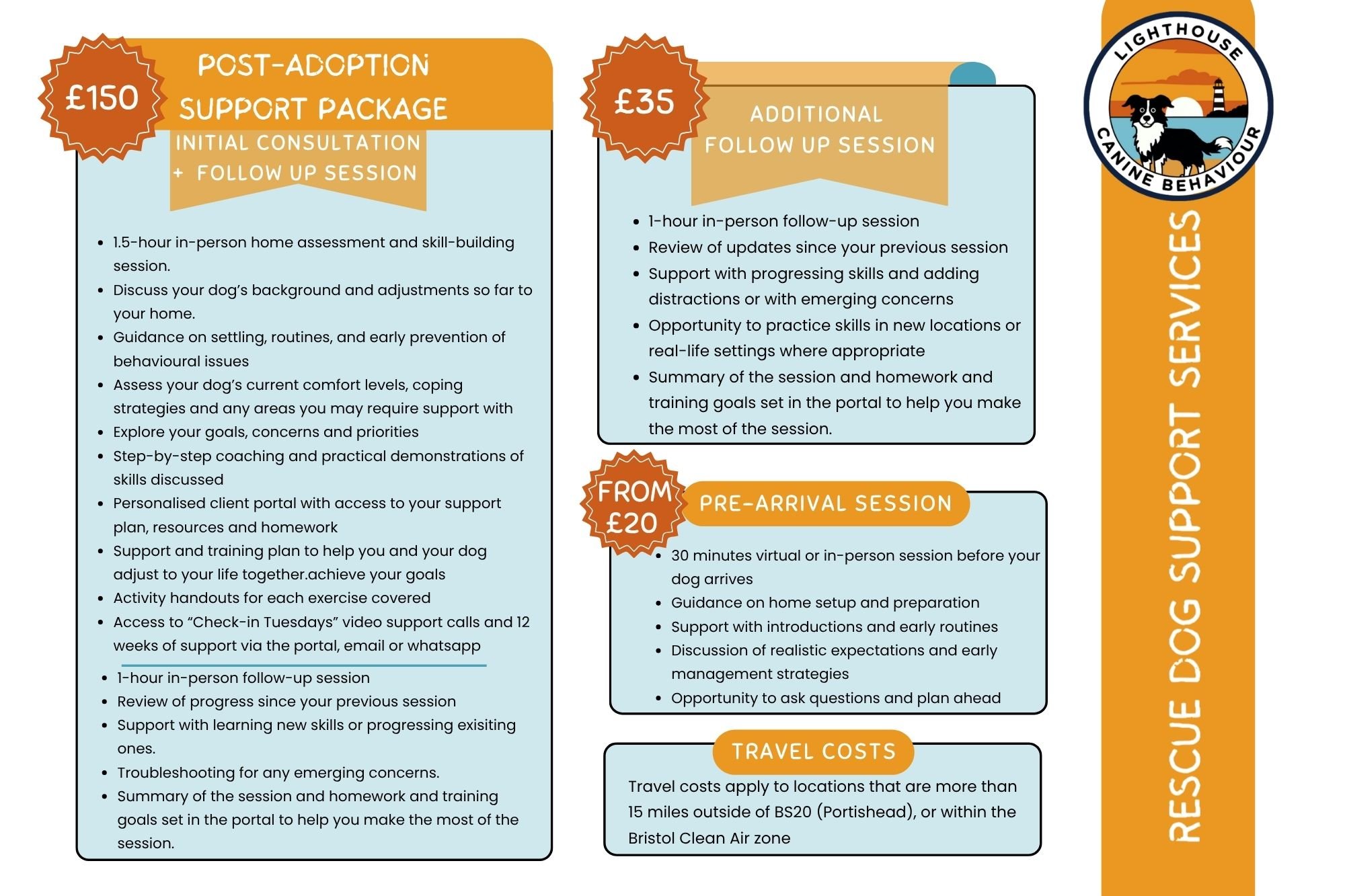
Rescue Dog Support Packages (From £150)
Designed to help new (or existing) rescue dogs transition smoothly into their homes. Focusing on prevention, settling strategies and early intervention to promote a smooth and successful start. The package includes an in-person assessment and skill-building session, a personalised training plan, email support, and a follow-up session. Optional pre-arrival sessions are available to discuss home setup and introductions.
-
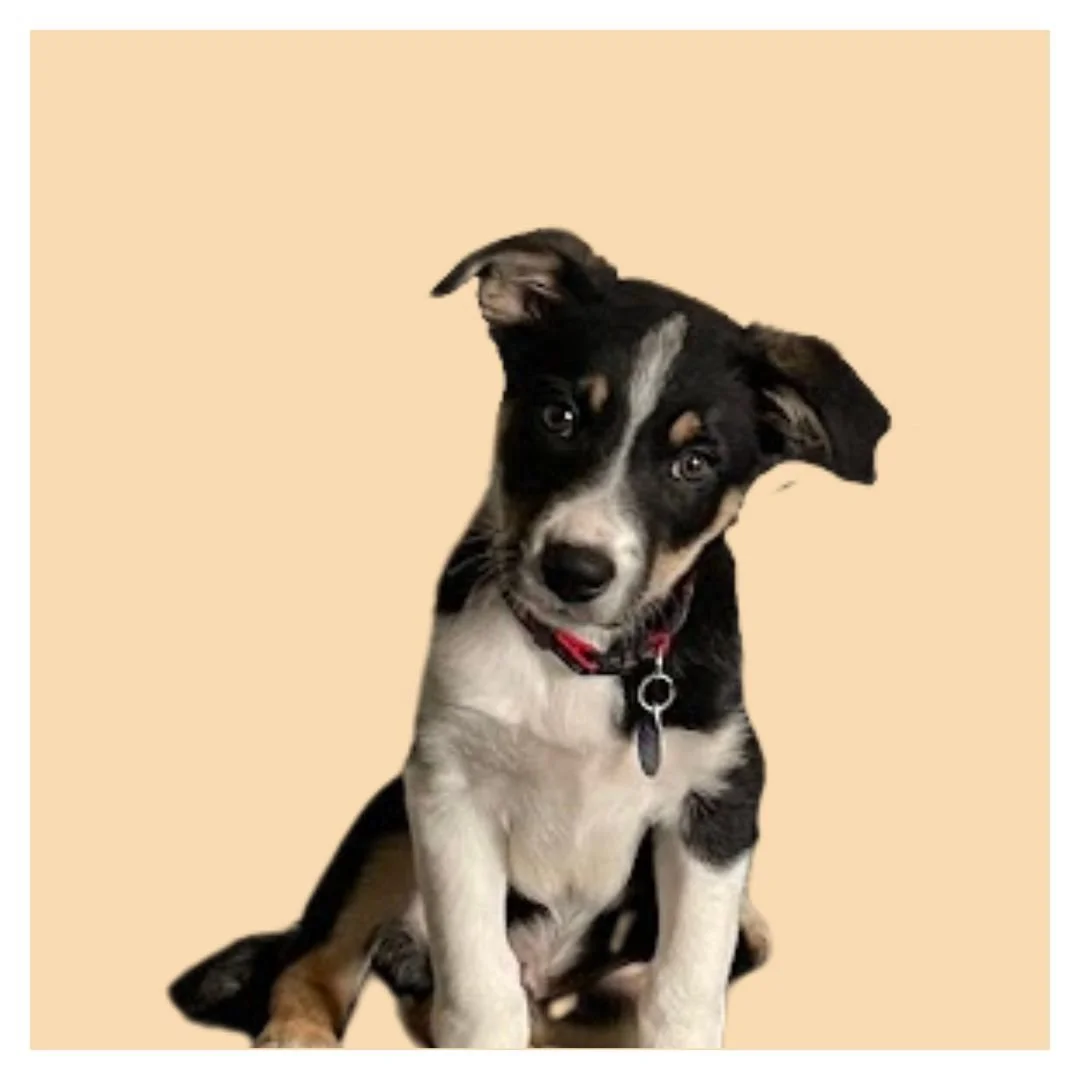
![A cute puppy with a tilted head, black, white, and tan fur, and floppy ears, sitting against a beige background.]()
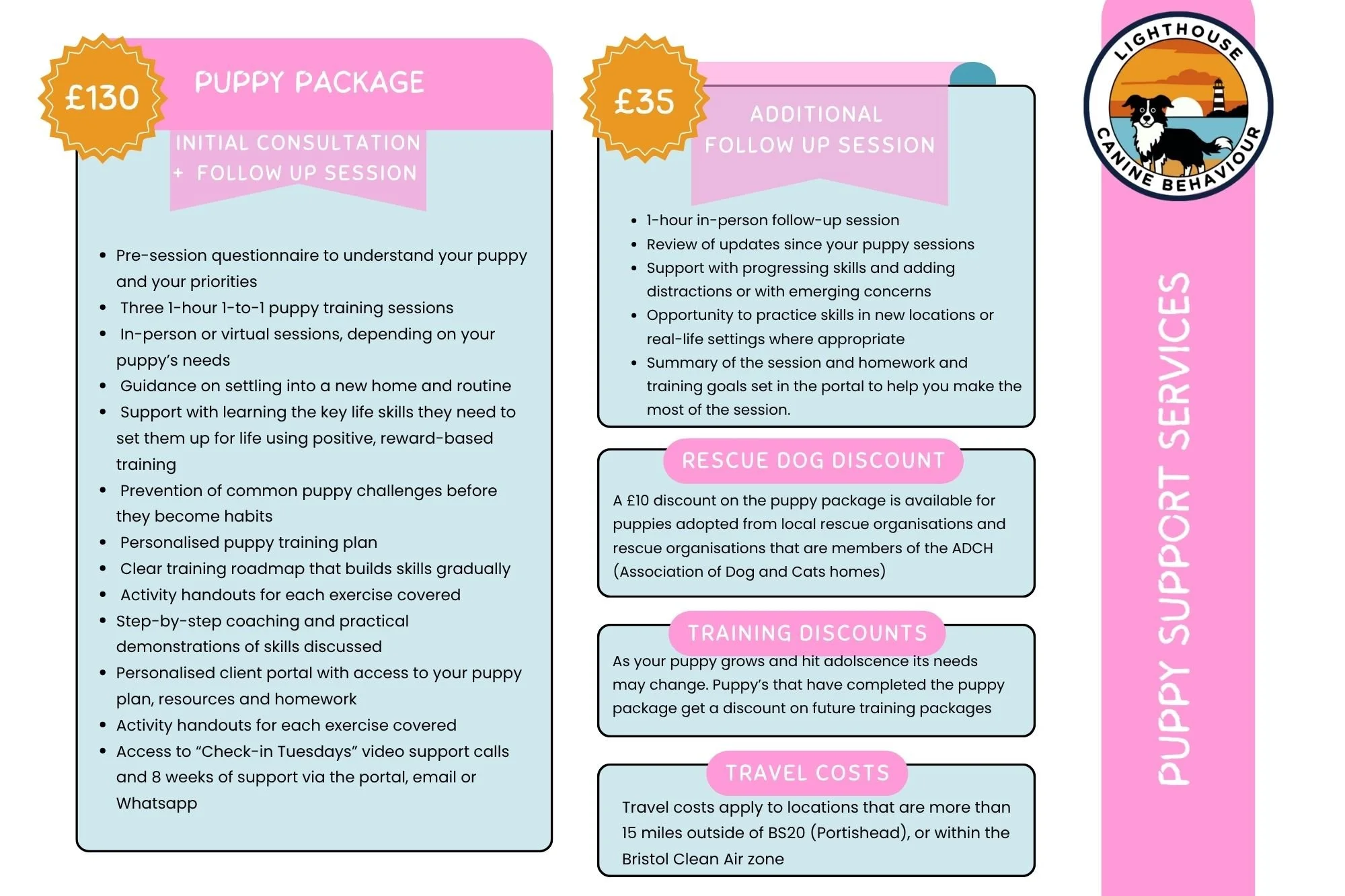
Puppy Packages (£130)
Designed to support you through the early stages of puppyhood. Focuses on prevention, key life skills, and positive training, with a personalised plan and practical guidance to set your puppy up for long-term success.
Behaviour Consultations
At Lighthouse Canine Behaviour, I offer a comprehensive and compassionate behaviour consultation service, available both in person and virtually, to support you and your dog every step of the way.
Each consultation includes detailed history taking, a review of veterinary medical records, careful assessment and diagnosis, a clear explanation of your dog’s behaviour, practical management strategies, and a fully personalised behaviour modification plan tailored to your dog and your goals.
Before the consultation
The assessment process begins before we meet. You’ll be asked to complete a detailed pre-assessment questionnaire to help me understand your dog, their history, and your concerns. I’ll also review your dog’s medical records, which your referring vet provides.
Where helpful, I may ask you to share short video clips of your dog’s behaviour. This allows me to see what’s happening in real life and ensures our session is as focused and effective as possible.
The behaviour consultation
Behaviour consultations usually take place in your home. However, sessions can also take place in other agreed locations or virtually, depending on you and your dog’s needs.
During the consultation, we’ll:
Continue the history-taking process, building on the information from your pre-assessment forms and veterinary records
Explore your goals, concerns, and expectations.
Identify and diagnose your dog’s behavioural difficulties.
I’ll then talk you through what’s going on for your dog, explaining their behaviour and the motivations behind it in a clear, supportive way. My aim is for you to leave the session with a much deeper understanding of your dog — because understanding is the first step towards behavioural change.
We’ll also discuss initial management strategies to support your dog right away, along with a comprehensive treatment plan tailored to your dog’s needs and your goals.
I’ll explain and demonstrate any practical skills or techniques that make up part of the treatment plan. There will be plenty of opportunities for you to ask any questions you have.
After the consultation
On the day of your consultation, you’ll receive a brief summary on the client portal outlining what we discussed and any immediate next steps.
Within 10 working days, you’ll receive:
A detailed, personalised behaviour plan
A written report sent to your referring vet
You’ll also have 8 weeks of follow-up support via WhatsApp or email, so you won't feel alone as you begin implementing the plan.
As your dog progresses, you can book in-person follow-up sessions to review progress, refine the plan and learn more skills.
Some techniques take time and are taught in stages, with your dog needing to master a few foundation skills first. Follow-up sessions are ideal for showing you the next step, refining your technique, and supporting you as your dog progresses.
Behaviour Consultations can address issues such as:
Fear, anxiety, and phobias
Such as noise sensitivity, separation-related distress, fear of people, dogs, or places.
Aggression and reactive behaviour
Including aggression towards people, dogs, or other animals.Resource guarding
Guarding of things such as food, toys, resting places or people.Separation-related behaviours
Including vocalisations, pacing, destruction or inappropriate toileting when left aloneCompulsive or repetitive behaviours
Such as tail chasing, shadow chasing, or excessive lickingHandling and husbandry difficulties
Problems with grooming, nail clipping, veterinary visits, or wearing equipmentTraining concerns that do not respond to basic training advice
This includes issues with arousal/ excitement, mouthing and mounting that are either escalating or not responding to basic training.Changes in behaviour
Sudden or unexplained changes in behaviour or those that may be associated with ageing.Multi-dog household issues
Including tension, conflict, inappropriate behaviour, or breakdowns in relationships between dogs
1-2-1 Training Packages
At Lighthouse Canine Behaviour, I offer focused, practical 1-to-1 training sessions for dogs who don’t require a full behaviour consultation but would benefit from personalised, hands-on support.
Each training package includes tailored exercises, step-by-step guidance, and a personalised training plan to help you and your dog meet your goals. The aim is for you both to leave the sessions with a greater understanding of your dog and feeling confident and empowered to continue training between sessions.
Before the session
Before your first training session, you’ll be asked to complete a short pre-session questionnaire. This helps me understand your dog, their background, and what you’d like to work on, so we can make the most of our time together.
During the session
This initial training session lasts 1.5 hours and usually takes place in your home. During the session, we’ll:
Discuss your goals and priorities for training
Assess your dog’s current skills and learning style
Break skills down into clear, manageable steps to achieve your goals
I’ll explain how your dog learns and why certain techniques are being used, so you’re not just following instructions but really understanding the process. Training is tailored to you and your dog, ensuring it feels achievable and supportive rather than overwhelming.
You’ll be introduced to practical exercises to help you reach your goals, with demonstrations and coaching to build your confidence in your handling, timing, and technique. You’ll have plenty of opportunity to ask questions throughout.
After the consultation
On the day of your training session, you’ll receive a brief email summary outlining what we covered. Within 10 working days of your initial session, you’ll receive a personalised training plan designed to support clear, structured progress.
Your training plan is made up of three key parts:
Focus areas and goals
A clear outline of the goals we discussed, the exercises we’ll use to achieve them, and the reasoning behind each activity.Training roadmap
A step-by-step guide showing the logical order in which skills are introduced, ensuring training progresses at a manageable pace and builds on previous learning.Activity handouts
Easy-to-follow handouts for each exercise covered during the session, so you know exactly what to practise and how.
While your training plan provides the step-by-step guidance needed to work towards your goals, some skills are taught gradually. Your dog may need to master foundation steps before moving on to more advanced stages.
Follow-up sessions are ideal for reviewing progress, demonstrating the next steps, refining technique, and providing support as your dog develops. They also offer the opportunity to practise skills in new environments and troubleshoot when things feel challenging.
1-to-1 training is suitable for teaching:
Basic life skills and foundation training
Loose lead walking
Recall
Impulse control and reducing over-excitement
Reducing jumping up, mouthing, or adolescent behaviours
Settling and focus around distractions
Confidence-building for everyday situations
If concerns are identified during training that may benefit from a full behaviour consultation, this will always be discussed with you openly and supportively.
Rescue dog support packages
At Lighthouse Canine Behaviour, the Rescue Dog Support Package is designed to help newly adopted (or existing) rescue dogs transition smoothly into life in their new homes. The focus is on settling strategies, prevention and early intervention of common issues dogs may experience in their new homes and helping you start building your relationship with your dog. , giving your dog the best possible start and helping you feel confident from day one.
This package is ideal for dogs adjusting to a new environment, routine, or family, and for guardians who want clear guidance and reassurance during the transition.
Each package includes an in-person assessment and skill-building session, a personalised training plan, ongoing email support, and a follow-up session to review progress and build on foundations
Optional pre-arrival support session (£20)
For dogs who haven’t yet come home, an optional pre-arrival session is available. This session takes place before your dog arrives and focuses on preparation and prevention. This session is designed to help you feel prepared and confident before your dog even walks through the door.
During a pre-arrival session, we can discuss:
Setting up your home environment
Managing the first few days and weeks
Introductions to people, dogs, and other animals
Routines, boundaries, and expectations
Reducing stress and overwhelm during the transition
Before the session
Before your in-person session, you’ll be asked to complete a short questionnaire to help me understand your dog’s background, what you know about their history, and any early concerns or priorities.
It would also be helpful if you could share any documentation or information you received from the rescue organisation about your dog and their behaviour.
During the session
The initial 1.5-hour session usually takes place in your home.
During the session, we’ll:
Discuss your dog’s background, early behaviour, and adjustment so far
Explore your goals, concerns, and priorities
Assess your dog’s current comfort levels, coping strategies, and emerging behaviours
I’ll explain what your dog’s behaviour may be communicating and how best to support them during this settling period. The focus is on understanding, prevention, and building positive foundations, rather than waiting for problems to develop.
We’ll also work through practical skills and management strategies, with demonstrations and hands-on guidance where appropriate. You’ll have plenty of opportunities to ask questions throughout.
Follow-up session
A follow-up session is included as part of the package and is usually booked once your dog has had time to practise the foundation skills and settle further into their routine.
This session allows us to:
Review progress and address any challenges
Introduce next steps or progress skills
Adjust strategies as your dog’s needs change
Support you as new situations or behaviours arise
Who may need a behaviour consultation instead?
The Rescue Dog Support Package is designed for prevention, settling support, and early intervention. However, some dogs may benefit from a full behaviour consultation instead, particularly if they are showing signs of more complex or high-risk behavioural concerns, or if the rescue organisation has already identified a behavioural issue.
A behaviour consultation may be more appropriate if your dog is showing:
Aggression or attempts to bite people or other animals
Severe fear, anxiety, or panic that significantly affects daily life
Intense reactivity towards people, dogs, or the environment
Resource guarding that involves snapping, lunging, or biting
Separation-related distress causing significant vocalisation, destruction, or self-injury
Sudden or unexplained changes in behaviour
Behaviour that poses a safety risk to your dog, your household, or others
Behaviour consultations involve assessment, diagnosis, and treatment planning and require a veterinary referral.
If you’re unsure which option is right for your dog, that’s completely fine. The introductory call allows us to discuss your dog’s individual requirements in more detail so that I can recommend the most suitable service for you and your dog.
This package is suitable for rescue dogs who are:
Newly adopted or recently rehomed
Settling into a new environment
Not currently showing severe fear, aggression, or distress
If more complex behavioural concerns arise, this will always be discussed openly, and you’ll be supported in accessing the most appropriate next steps.
After the session
On the day of your session, you’ll find a brief summary of the session on the client portal outlining what we discussed and any immediate next steps, resources or equipment recommended and activity handouts and any exercises during the session.
Within 10 working days, you’ll receive a personalised training and support plan, tailored to your dog and your household. This plan will include:
Clear focus areas and goals
A structured roadmap to support gradual settling and learning
Practical exercises and management strategies
You’ll also receive support via the client portal, WhatsApp or email and access to “Check-in Tuesday” video calls to help you implement the plan and navigate any early challenges.
Puppy Package
At Lighthouse Canine Behaviour, the Puppy Package is designed to guide you through the early stages of puppyhood with clarity, confidence, and practical support. The focus is on teaching key life skills, introducing positive, reward-based training and helping to set your puppy up for long-term emotional wellbeing and success. It is suitable for puppies from 8 weeks old to 20 weeks.
This package includes three one-hour sessions, allowing training to progress gradually as your puppy grows and develops, alongside a personalised training plan tailored to your puppy, your lifestyle, and your goals.
Before the session
Before your first session, you’ll be asked to complete a short questionnaire so I can learn more about your puppy, their age, breed, background, and your priorities.
This helps ensure our sessions are focused, relevant, and supportive of both you and your puppy during this important learning period.
The puppy sessions
The package consists of three one-hour sessions. These sessions usually take place in your home but can also be held at other agreed-upon locations or virtually, depending on your puppy’s age and needs.
Across the three sessions, we’ll focus on:
Supporting your puppy to settle into their new home and routine
Building positive foundations for handling, grooming, and veterinary care
Introducing your puppy to positive reinforcement training
Teaching key life skills
Socialisation and habituation
Coping with common puppy challenges
Helping you understand how your puppy learns and communicates
Training is broken down into clear, achievable steps, with practical demonstrations and hands-on coaching throughout. I’ll explain not just what to do, but why, so you feel confident continuing training between sessions.
Puppy development happens quickly, and skills often need to be introduced in stages. The three-session structure allows time to practise foundation skills, review progress, and build on learning in a way that supports your puppy’s confidence.
There will be plenty of opportunities to ask questions and adjust the sessions as your puppy grows.
After each session
After each session, you’ll receive a brief email summary outlining what we covered and what to focus on next.
Within five days of your first session, you’ll receive a personalised puppy training plan. This plan will include:
Clear focus areas and goals
A structured training roadmap that builds skills gradually
Practical exercises and guidance to support progress at home
How to start your Journey
FAQs
GETTING STARTED
-
I’m based in Portishead (BS20) and primarily offer in-person behaviour consultations across North Somerset and parts of Bristol.
Home visits are included within 15 miles of BS20.
For locations further than this, travel costs may apply. Additional charges may also apply for appointments within Bristol’s Clean Air Zone. If you’re unsure whether I cover your area, feel free to get in touch. I’m always happy to check and discuss options, including whether remote support may be appropriate.
-
Like many behaviourists, I’m self-employed and don’t have my own office or admin team. Much of my working day is spent with clients and dogs, and so I’m unable to answer phone calls consistently.
Submitting an enquiry via our contact form or email allows me to:
Give your enquiry the time and attention it deserves
Read through your concerns properly, rather than rushing a conversation
Respond thoughtfully when I’m not in the middle of a session or on the road
Once I’ve had a chance to review your enquiry, I’ll be in touch by email to talk through next steps, which normally involves arranging an introductory call at a time that works for both of us.
-
Once you’ve been in touch, I’ll reply by email within 48 hours to talk through your concerns and explain what the next steps might look like. I may ask a few follow-up questions to better understand what’s been going on for you and your dog, or suggest arranging an introductory call if that feels helpful.
-
An introductory call is a relaxed, no-pressure conversation where I will:
Introduce myself and explain how I work
Ask a few more questions to understand your situation and what support might be most appropriate
Talk you through the next steps, including the vet referral process
Offer behavioural first aid guidance where needed, to help keep everyone safe
WORKING WITH YOUR VET
-
Yes. As an associate/pre-certified Clinical Animal Behaviourist, I can only carry out behaviour consultations with a valid referral from your dog’s vet.
This helps ensure your dog’s physical health has been considered alongside their behaviour, which is an essential part of ethical and effective behaviour support.
Once you get in touch, I’ll explain the referral process and provide everything your vet needs to complete it.
-
To make sure behaviour support is safe and appropriate, APBC, ABTC and CCAB guidelines require clinical animal behaviourists (including pre-certified or associate members) to work in collaboration with your vet, through a referral from your dog’s primary practice.
Many behaviour changes are influenced by underlying medical factors such as pain, illness, or discomfort. A vet referral helps ensure these possibilities have been considered before, or alongside, behaviour support.Working with your vet allows behaviour recommendations to be made safely, ethically, and in your dog’s best interests. It also means your dog’s behaviour plan can take into account any relevant medical history or ongoing treatment.
This collaborative approach gives your dog the best chance of meaningful, long-term improvement.
-
Because I work at a clinical behaviour level, behaviour consultations take place with a referral from your dog’s own vet. There are two ways this can happen, depending on what feels easiest for you.
Option 1: Direct referral from your vet
Your veterinary surgeon can refer your dog directly to me at your request.
Information for vets, including the online referral form, can be found on the “For Veterinary Professionals” page. Alternatively, your vet can send the referral by email to info@lighthousecaninebehaviour.com.
Once I’ve received the referral, I’ll contact you by email to talk through the next steps.
Option 2: Owner-led referral
You’re also welcome to get in touch with me first to talk about your dog before asking your vet for a referral.
This gives us a chance to discuss what’s been going on and make sure the right type of support is in place before the referral is requested.
Here’s how that process usually looks:
You get in touch
You submit an enquiry through the website and tell me a little about your dog and the concerns you have.We talk through next steps
If a behaviour consultation is the right option, I’ll explain the referral process and answer any questions.Your vet completes the referral
I’ll provide a short letter for you to pass on to your vet, asking them to complete the online referral form. Your vet may also ask for written consent to share your dog’s clinical notes.I review the referral
Once the completed form and clinical notes are received, I’ll review everything carefully to make sure it’s appropriate to move forward.After the referral is in place, we can book your behaviour consultation and begin the assessment and support process.
-
No. As a Clinical Animal Behaviourist, I cannot prescribe medication, recommend specific drugs, or advise on dosages.
Under the Veterinary Surgeons Act 1966, decisions about medication must be made by a veterinary surgeon, who is legally and professionally responsible for prescribing and monitoring medical treatment.
My role is to work alongside your vet, providing behavioural insight that may help inform their clinical decision-making.
-
If medication may be beneficial, I will:
Share behavioural observations and assessments with your vet
Explain how medication could support behaviour modification
Work collaboratively to ensure behaviour and medical plans complement each other
Your vet remains responsible for all prescribing, monitoring, and medication reviews.
-
After your behaviour consultation, I prepare a written behaviour report for your vet outlining relevant findings, recommendations, and next steps.
This allows your vet to:
Have a clear overview of the behavioural assessment, any behavioural diagnosis, treatment plans and prognosis
Understand any welfare or safety considerations.
Consider whether medical support (such as pain management or medication) may be helpful alongside behaviour work.
Ensure behaviour and medical plans complement each other
If needed, I may also liaise further with your vet to clarify information or discuss how best to support your dog moving forward.
This approach helps make sure your dog’s care is joined-up, ethical, and focused on their overall wellbeing.
BEHAVIOUR SUPPORT AND SERVICES
-
I support dogs with a wide range of behavioural concerns, including (but not limited to):
Fear, anxiety, and stress-related behaviours
Reactivity towards people, dogs, or other animals
Aggression and bite risk assessment
Separation-related behaviours
Behaviour challenges in newly adopted or rehomed dogs
Complex cases involving multiple factors
-
Behaviour support involves much more than the time spent in the consultation itself. A lot of the work happens before and after we meet, and packaging support allows me to give your case the time and care it needs without watching the clock.
Time spent outside of the consultation on your dog’s case may include:
Reviewing your dog’s history and any questionnaires in detail
Liaising with your vet and reviewing referral information
Analysing behaviour patterns and contributing factors
Creating a personalised, written behaviour plan
Preparation of a report to send to your veterinary surgeon
Providing follow-up support by email or WhatsApp
Adjusting recommendations as things progress
Behaviour change takes time, often weeks or months rather than days or individual sessions. While an initial consultation and your dog’s personalised behaviour or training plan provide the knowledge, guidance, and clear roadmap needed to support long-term change, this plan may evolve as your dog responds and progresses.
Packages allow for continuity and ongoing guidance, ensuring support is in place as your dog develops. Follow-up sessions are particularly valuable for demonstrating and discussing each next step once foundation skills have been established.
-
Yes. All behaviour packages include follow-up support via email and WhatsApp, some packages include a 1-hour follow-up session, and additional sessions can be booked as required.
Behaviour change takes time, and ongoing guidance helps ensure plans are adjusted as needed. -
I use evidence-based, force-free approaches that prioritise your dog’s emotional wellbeing and safety. All recommendations are tailored to your individual situation.
-
Medication can be a helpful part of a behaviour support plan for some dogs, particularly where fear, anxiety, or chronic stress is significantly affecting their wellbeing or ability to cope.
It is not a “quick fix” and is never used on its own. When medication is appropriate, it works best alongside behaviour modification and environmental changes, helping dogs feel safe enough to learn and respond to support.
Medication might be something we discuss with your vet if:
Your dog's anxiety or fear is severe, long-standing and generalised
Behaviour is preventing the dog from functioning day-to-day
Stress levels are so high that learning or behaviour change is difficult
There is a risk to welfare or safety
Previous behaviour strategies alone have not been enough
Any discussion around medication is always individual, thoughtful, and collaborative.
-
Where possible, I prefer initial behaviour consultations to take place in person, as this allows me to demonstrate practical skills and better understand your dog’s home set-up and environment.
However, virtual consultations are available where distance, accessibility, or your dog’s individual needs make this a more appropriate option.
In some cases, parts of the behaviour consultation, such as history-taking, assessment, and owner education, may be conducted virtually. This is sometimes recommended when additional steps need to be put in place first, such as medication, management changes, or safety measures (for example, muzzle training), before I can see your dog in person.
Any decision to work remotely is always based on what is safest and most appropriate for your dog and your situation.
-
This is a really common question, and you’re not expected to know the answer on your own. The two services support dogs in different ways, and we will use the introductory call to help you select the option that best meets your dog's needs.
1-to-1 Training may be for your dog if:
Your dog does not show signs of fear, anxiety, or aggression
You’re working on skills such as recall, loose lead walking, jumping up, or over-excitement
Training issues are mild to moderate, and responding to reward-based methods
You’d like practical, hands-on guidance and clear step-by-step exercises
There has been no significant or sudden change in your dog’s behaviour
1-to-1 training focuses on teaching skills, improving communication, and building good habits.
A Behaviour Consultation is more appropriate if:
Your dog is showing fear, anxiety, phobias, or reactive behaviour
There is aggression, guarding, or risk of harm to people or animals.
Behaviour has escalated, feels unpredictable, or is affecting daily life.
There has been a sudden change in behaviour
Previous training advice hasn’t helped.
The behaviour may have an emotional, medical, or welfare component.
Behaviour consultations involve assessment, diagnosis, and treatment planning and require a veterinary referral.
If you book 1-to-1 training and it becomes clear that a behaviour consultation would better support your dog, we will discuss this honestly and kindly, with no pressure or judgement. Your dog’s welfare, safety, and emotional well-being always come first, and it’s important to me that we provide your dog with long-term positive behavioural change rather than quick fixes or behavioural suppression.
PROFESSIONAL STANDARDS AND YOUR PEACE OF MIND
-
I’m highly educated in canine behaviour, with both academic training and extensive hands-on experience.
I have completed 6 years of university-level education in canine behaviour and hold a BSc in Animal Behaviour and Welfare from the University of Bristol, and an MSc in Clinical Animal Behaviour from the University of Edinburgh. For clients, this means your dog’s behaviour is approached using up-to-date, evidence-based knowledge.
However, I know academic knowledge on its own isn’t enough. Alongside my qualifications, I have over 15 years of practical experience working with dogs in various settings, including pet homes, training environments, and rescue settings. This experience shapes how I work every day, helping me offer advice that is not only scientifically informed but also realistic, compassionate, and achievable.
My approach brings together science, experience, and empathy, so support is flexible and tailored to both you and your dog, rather than a one-size-fits-all textbook approach.
You can find out more about me in the “About” section.
-
I am a Pre-Certified Clinical Animal Behaviourist (CCAB) and an Associate Clinical Animal Behaviourist Member of the APBC.
This means:
I have demonstrated that I have the required academic understanding for the role of the Clinical Animal Behaviourist
I have agreed to work within the code of conduct and professional and ethical guidelines of both organisations.
I am allowed to conduct clinical behaviour consultations to gain practical experience and to build an assessed case portfolio to apply for assessment for full membership. My work is supported by professional supervision.
I am required to complete 30 hours of CPD a year to keep my knowledge up to date
-
I always aim to provide supportive, ethical, and professional behaviour support. However, if you’re unhappy or have concerns at any point, I encourage you to contact me directly in the first instance.
If you feel unable to raise your concern with me, or if you are not satisfied with the outcome, you are entitled to escalate your complaint through the relevant professional bodies.
As a practitioner working under the CCAB and APBC frameworks, I am accountable to their professional codes of conduct.
Both organisations provide clear guidance on how to report a practitioner and how complaints are reviewed. Information on their complaint procedures can be found directly on their websites.
-
Your privacy is taken seriously, and your information is handled carefully, respectfully, and in line with UK data protection law.
In short:
I only collect information that’s necessary to support you and your dog
Your details are used for behaviour support, communication, record-keeping, and (with your consent) working alongside your vet
Your information is stored securely and never sold or used for marketing
Sensitive information is treated with extra care and only accessed when professionally necessary
Your data is only shared where appropriate and on a need-to-know basis (for example, with your vet or professional supervisors, where relevant, you will be asked for your consent to do this)
You have the right to access your data, request corrections, withdraw consent, or ask questions about how your information is used at any time.
For full details, including what data is collected, how long it’s kept, and your rights under UK GDPR, please see my Privacy Policy
If you have any concerns about how your data has been handled, I encourage you to contact me first so I can try to resolve things. You also have the right to raise a concern with the Information Commissioner’s Office (ICO), which oversees data protection in the UK.
-
My full Terms and Conditions are available to view online here.
They outline how I work, what to expect from behaviour support, and important information around bookings, cancellations, and responsibilities. If you have any questions after reading them, you’re very welcome to get in touch.
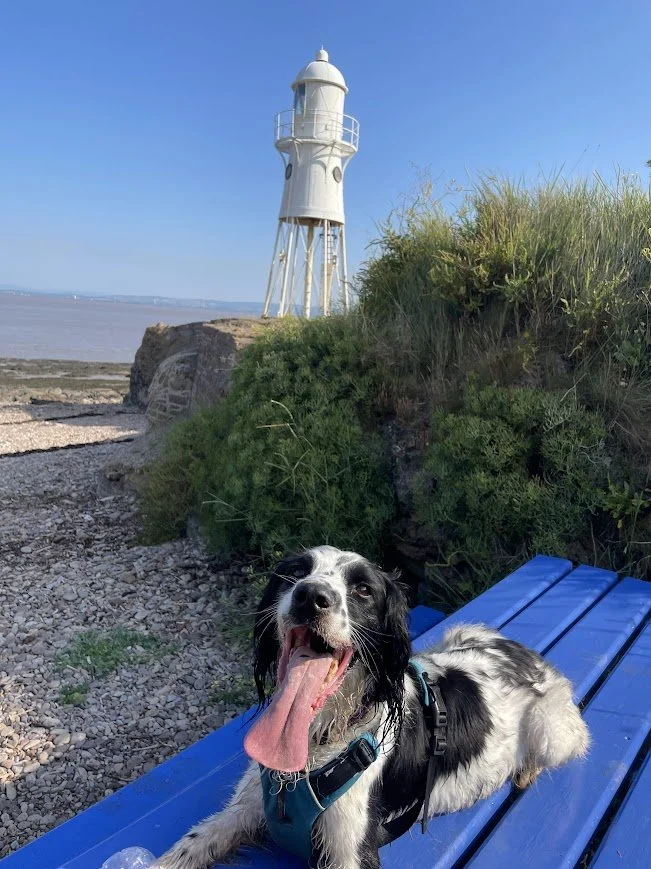
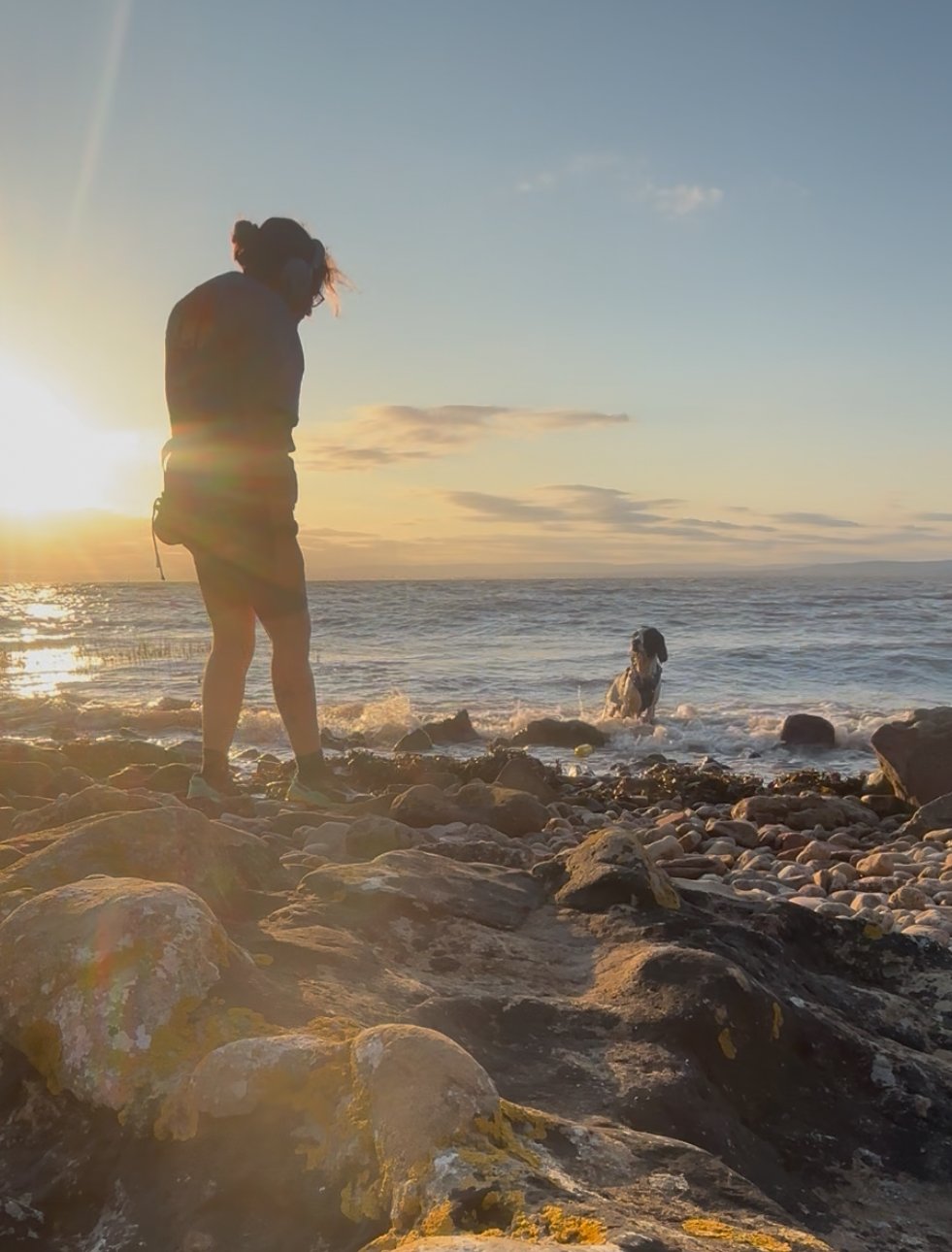
Lighthouse Canine Behaviour is based in Portishead, and we support clients in person in North Somerset and Bristol.
Travel Costs apply to locations more than 15 miles outside BS20 and to sessions within the Bristol Clean Air Zone; these will be communicated to you before booking.